Cleaning
/
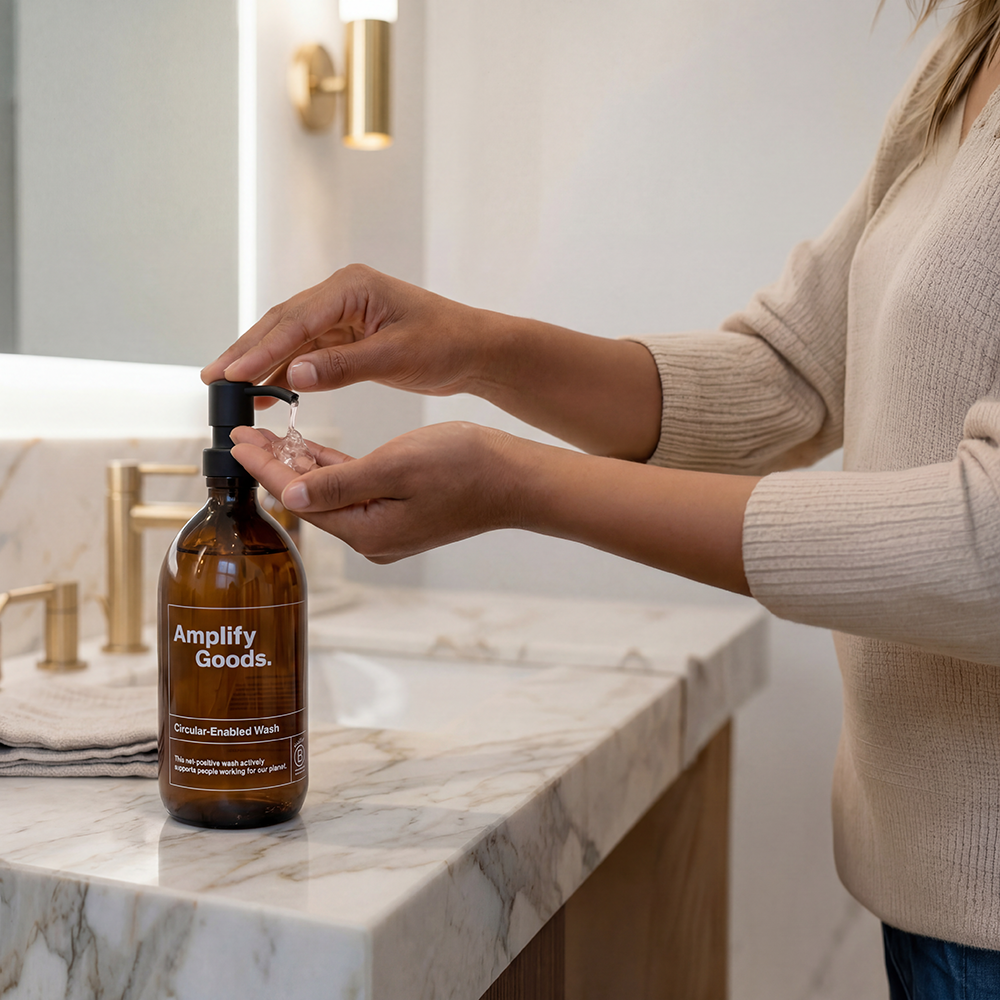
There’s something sitting in almost every washroom in the country. It’s ordered in bulk, quickly consumed, and replaced without a second thought. And it costs very little.
Or so it seems.
Hand wash is a fairly unremarkable line item on any facilities budget. But if you follow the true cost of that bottle of liquid soap, from formulation to end-of-life, it tells a more complicated story than the price per litre ever could.
Hidden costs
The liquid soap sitting in your office or hotel washroom is, in most cases, more than 80% water. That water is manufactured into the product centrally, bottled in virgin plastic, palletised, and repeatedly shipped the length of the country. When the bottle runs out, it becomes waste. Much of it is technically recyclable. In practice, most of it isn’t.
That’s before you consider the chemistry. Many mainstream formulations rely on petrochemical-derived surfactants, and synthetic fragrances that can persist in waterways long after they’ve been washed down the drain. And then there’s the antimicrobial question: the widespread and largely unnecessary use of antibacterial products is quietly contributing to antimicrobial resistance, one of the most serious long-term public health risks we face.
And as more and more is mechanised in high volumes, and AI steps in too, it’s also harder for people struggling with long term unemployment to get work – costing us as a society.
None of this appears on the invoice. It’s externalised. Planet and communities absorb it on our behalf.
What “cheap” is really buying
The cleaning and hygiene industry has been particularly susceptible to green washing – something we call “foam without action“. Products dressed up with green credentials that, under scrutiny, don’t hold up. Recyclable packaging that never gets recycled. Carbon offsets that don’t offset. Vague claims about natural ingredients wrapped around formulations that are anything but.
This matters not only environmentally but economically.
When a business chooses the cheapest option without understanding the full picture, it is, in effect, subsidising a system that externalises and perpetuates harm.
When a business chooses the cheapest option without understanding the full picture, it is, in effect, subsidising a system that externalises and perpetuates harm. The real cost is being paid elsewhere, by coastal communities dealing with plastic pollution, by ecosystems absorbing petrochemical runoff, and by people facing barriers to work who are overlooked by supply chains that have never been designed with them in mind.
Procurement that ignores these externalities might be saving money today, but they’re deferring a much higher cost.
What doing it differently looks like
At Amplify Goods, we’ve spent the last four years demonstrating what the alternative looks like, and that it works commercially. Our refill-first approach means customers of Bunzl, Lyreco, Foremost, Hayes, Mayflower and many others buy a durable Forever Glass bottle once and refill it with bulk formats, dramatically cutting plastic waste and the associated transport emissions. And our newest innovation, SUDZERO, is designed to remove water from the format entirely: a concentrated powder-to-foam handwash that is 98% lighter and 97% smaller than bulk liquid soap, with over 84% carbon savings verified by independent Life Cycle Assessment.
But the part of our model we’re most proud of is harder to bottle. All the non-5L products are packed by people facing barriers to employment, such as homelessness, disability or learning differences. In 2025, that meant 1,076 hours of living-wage paid work experience, 15 individuals supported, and a Social Return on Investment independently certified at over £1.3 million. Five people have since moved on into longer-term employment. Our SROI isn’t a marketing figure. It’s a methodology, independently reviewed by MeasureUp.
This is something most conventional supply chains don’t account for: the positive value that can be created, not just the harm that can be reduced.
A summer to switch
Between World Environment Day on 5 June, World Refill Day on 16th June, Great Big Green Week and Plastic-Free July, there’s never been a better time to explore the possibilities of a refill-first future.
And to spread the message beyond big business and into homes, Amplify Goods is running a promotion throughout June and July: buy a 5-litre refill of our handwash or shampoo from our website and receive a free Forever Glass bottle to refill over and over again. ‘Forever Summer’ encourages homes and small businesses to start the habit and understand the difference firsthand, but the volume is really in businesses, so, advocate for us, help the switch happen faster and broader. Join us.
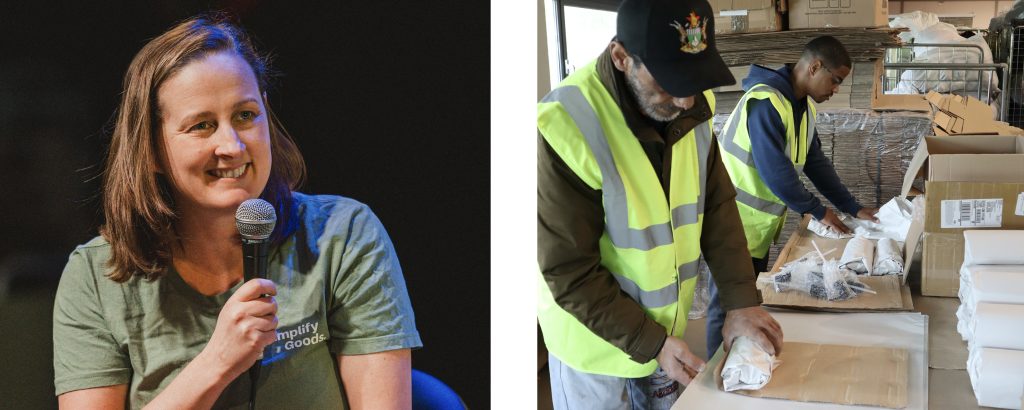
Amplify Goods founder Camilla Marcus-Dew – Marius wraps a Forever Glass bottle…